
Stocks Explained: A Beginner’s Guide to Investing in Shares
Learn what stocks are, how share investing works, and how beginners can earn through capital growth and dividends while building long-term wealth.
https://smartmoneytrail.in/
2/4/20262 min read


Investing in stocks is one of the most effective ways to grow your money over the long term. Yet, for many beginners, the stock market feels confusing, risky, or meant only for experts.
The truth is — anyone can start investing in shares with the right knowledge and mindset.
This beginner’s guide will help you understand what stocks are, how they work, and how you can start investing wisely.
What Are Stocks?
Stocks, also known as shares, represent ownership in a company.
When you buy a stock, you own a small part of that business.
For example:
If a company has issued 1,000 shares and you own 10 of them, you own 1% of the company.
As the company grows and becomes more profitable, the value of your shares can increase.
How Do You Make Money from Stocks?
Investors earn returns from stocks in two main ways:
1. Capital Growth
When a company performs well, its share price rises
You make a profit by selling shares at a higher price than you bought them
2. Dividends
Some companies share profits with investors
These payments are called dividends
Dividends provide regular income in addition to price growth
Why Should Beginners Invest in Stocks?
Stock investing offers several long-term benefits:
Helps beat inflation
Builds wealth over time
Offers higher returns than savings accounts
Allows you to benefit from business growth
When invested patiently, stocks have historically delivered strong returns over long periods.
Types of Stocks Beginners Should Know
1. Large-Cap Stocks
Well-established companies
More stable and less risky
Ideal for beginners
2. Mid-Cap Stocks
Growing companies
Moderate risk with higher growth potential
3. Small-Cap Stocks
Smaller companies
Higher risk but potentially higher rewards
Beginners should usually start with large-cap or well-known companies.
What Is the Stock Market?
The stock market is a platform where shares are bought and sold.
In India, the main stock exchanges are:
NSE (National Stock Exchange)
BSE (Bombay Stock Exchange)
Investors use trading platforms or apps to invest through these exchanges.
How to Start Investing in Stocks (Step-by-Step)
Step 1: Open a Demat and Trading Account
A Demat account holds your shares digitally
A trading account lets you buy and sell stocks
Step 2: Start with Small Amounts
Begin with an amount you’re comfortable investing
Avoid putting all your savings into stocks
Step 3: Research Before Buying
Check:
Company fundamentals
Business model
Financial performance
Long-term growth potential
Step 4: Invest for the Long Term
Avoid frequent buying and selling
Long-term investing reduces risk and increases returns
Common Mistakes Beginners Should Avoid
Investing based on tips or rumors
Trying to time the market
Panic selling during market falls
Ignoring diversification
Expecting quick profits
Successful investing requires patience and discipline.
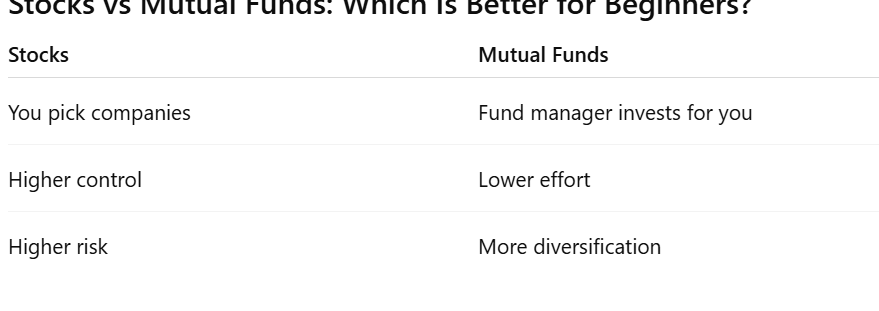
Stocks vs Mutual Funds: Which Is Better for Beginners?
👉 Beginners can start with mutual funds and gradually move into stocks as they gain confidence.
Is Stock Investing Risky?
Yes, stock investing involves risk — but risk can be managed by:
Diversifying investments
Investing long-term
Choosing strong companies
Avoiding emotional decisions
Risk decreases significantly when you invest wisely and stay invested.
Final Thoughts
Stocks are a powerful tool for building long-term wealth, especially when started early.
You don’t need to be an expert — just start small, stay consistent, and keep learning.
With patience and smart decisions, investing in shares can help you achieve financial independence over time.
Stay
Get tips and updates straight to your inbox
Subscribe
© 2026. All rights reserved.